


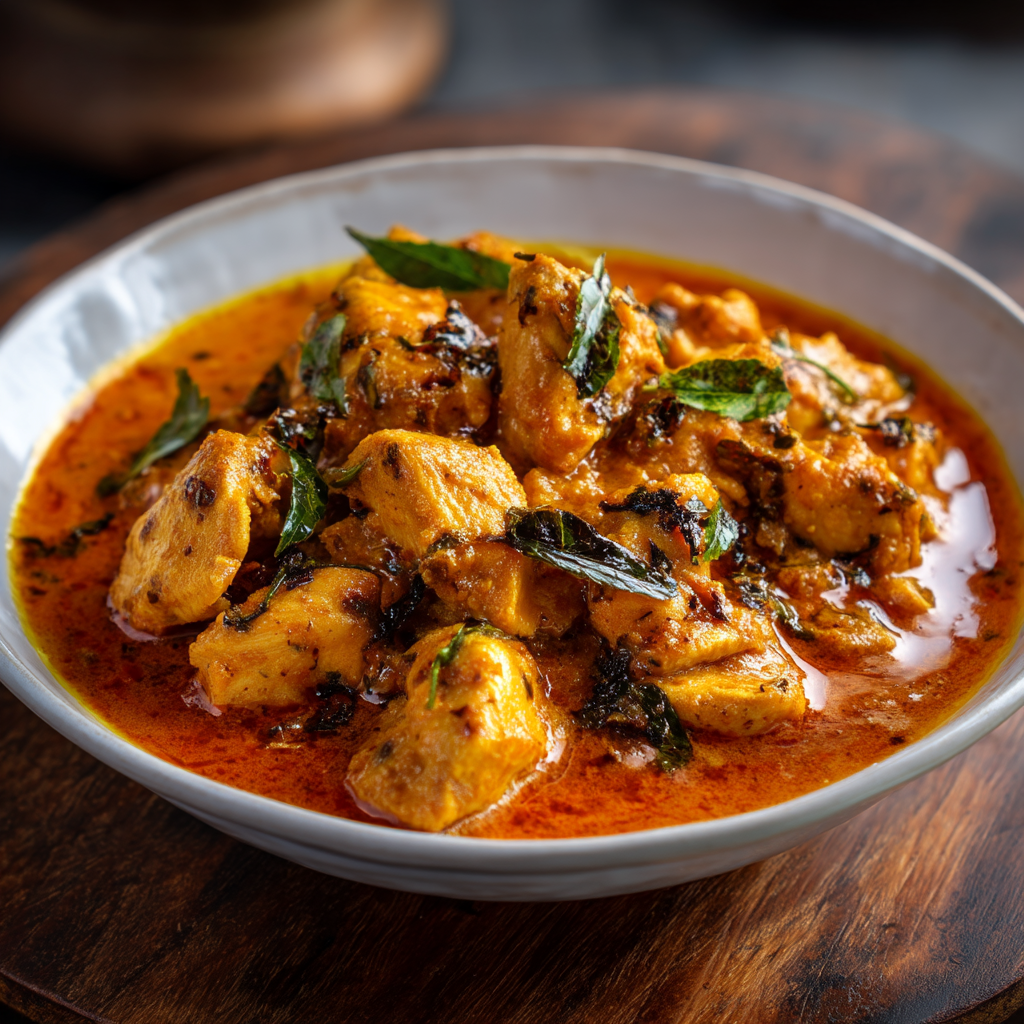
Simple South Indian Curry with Chicken and Coconut
Recipe Overview Cuisine: South Indian | Category: Main Course | Serves: 4 Prep Time: 15 minutes | Cook Time: 30 minutes | Total Time: 45 minutes
Why This Works
This simple South Indian curry delivers the signature flavors of Kerala-style cooking without specialty ingredients or complex technique. The method uses a double-tempering approach: whole spices bloom in hot oil at the start, then a second hit of aromatics finishes the dish. This layering creates depth usually reserved for slow-cooked curries in half the time. Coconut milk provides body and balances heat, while curry leaves and mustard seeds give that unmistakable South Indian character. Rice or flatbread soaks up the sauce, and leftovers taste better the next day.
Ingredients (Serves 4)
For the Curry Base:
- 600g boneless chicken thighs, cut into 3cm pieces
- 400ml full-fat coconut milk
- 200g red onions, thinly sliced (about 2 medium)
- 150g tomatoes, chopped (about 2 medium)
- 3 garlic cloves, minced
- 15g fresh ginger, minced (about 3cm piece)
- 2 green chilies, slit lengthwise (serrano or Thai chilies)
- 1 tablespoon tomato paste
- 250ml water
- Salt to taste
For the Spice Blend:
- 1 tablespoon coriander powder
- 1 teaspoon cumin powder
- 1 teaspoon turmeric powder
- ½ teaspoon red chili powder (adjust for heat preference)
- ½ teaspoon black pepper, freshly ground
For the First Tempering:
- 3 tablespoons neutral oil (sunflower or vegetable)
- 1 teaspoon black mustard seeds
- 1 teaspoon cumin seeds
- 10-12 fresh curry leaves (optional but recommended)
- 1 dried red chili, broken in half
For the Finishing Tempering:
- 1 tablespoon neutral oil
- 1 teaspoon black mustard seeds
- 6-8 fresh curry leaves
- Fresh coriander leaves for garnish
Method
Mise en Place (15 minutes)
Gather all ingredients before you start. You’ll need a large, heavy-bottomed pan or Dutch oven with a lid, a wooden spoon, measuring spoons, and sharp knife. Mix the four spice powders together in a small bowl. This prevents clumping when they hit the hot pan. Prep all aromatics completely before turning on the heat since the tempering moves fast.
Build the Tempering Base (3 minutes)
Heat 3 tablespoons oil in your pan over medium-high heat until it shimmers. Add mustard seeds and wait for them to pop aggressively, about 30 seconds. Toss in cumin seeds, curry leaves, and the broken dried chili. The curry leaves will crackle and the cumin will darken. This is your flavor foundation, and rushing it gives you bitter oil instead of aromatic depth.
Create the Aromatic Layer (5 minutes)
Drop the sliced onions into the tempered oil. Reduce heat to medium and cook until the onions soften and turn translucent with golden edges, stirring occasionally. Add the minced ginger, garlic, and slit green chilies. Cook for another minute until the raw smell disappears and the mixture becomes fragrant. If the pan looks dry, add a splash of water rather than more oil.
Add the Tomatoes and Spices (4 minutes)
Stir in the chopped tomatoes and tomato paste. Cook until the tomatoes break down and release their moisture, about 3 minutes. Add your mixed spice powders and salt. Cook the spices in the tomato mixture for one full minute, stirring constantly. This step blooms the ground spices and removes any raw, chalky taste. The mixture should look thick and darker, with oil separating at the edges.
Cook the Chicken (12 minutes)
Add the chicken pieces to the pan and stir to coat every piece with the spice mixture. Cook for 3-4 minutes, turning the chicken occasionally until the outside turns opaque. Pour in 250ml water and bring to a vigorous simmer. Cover the pan and cook for 8 minutes. The chicken will release liquid as it cooks. Check one piece by cutting it open after 8 minutes; the center should be opaque with no pink remaining.
Finish with Coconut Milk (6 minutes)
Pour the coconut milk directly from the can without shaking it first. This preserves the cream layer that adds richness. Stir gently to combine with the curry base. Bring the mixture to a bare simmer over medium-low heat. Cook uncovered for 5 minutes, stirring occasionally. The sauce will thicken slightly and the coconut flavor will mellow. Taste and adjust salt if needed.
Final Tempering (2 minutes)
In a small pan, heat 1 tablespoon oil until it shimmers. Add the mustard seeds and let them pop completely, then throw in the curry leaves. They’ll sizzle and crisp up in 10 seconds. Pour this entire mixture, oil and all, directly over the finished curry. The hot oil carries intense aroma that makes the dish smell like proper South Indian cooking. Garnish with torn coriander leaves.
What You Need to Know
The Double Tempering Technique: Tempering at both the start and finish creates layers of flavor impossible to achieve with a single spice addition. The first tempering builds the foundation by cooking whole spices in oil until their essential oils release. The final tempering adds bright, fresh spice notes that contrast with the cooked-down base. This is how South Indian restaurants get complexity in quick-cooking curries.
Coconut Milk Handling: Never boil coconut milk aggressively or it will split and look curdled. Keep it at a gentle simmer and stir occasionally. If your coconut milk does split, a quick blast with an immersion blender will bring it back together. Full-fat coconut milk is non-negotiable here; light versions lack the body this curry needs.
Curry Leaves: If you can’t source fresh curry leaves, skip them entirely rather than using dried. Dried curry leaves taste like dust and add nothing. The dish will still work without them, though you’ll lose that distinctive South Indian aroma. Some Asian grocers stock frozen curry leaves that work well.
The Result
The finished curry should have a vibrant orange-red color with a thin film of oil on the surface. The sauce clings to the chicken pieces without being thick or gluey. Each bite delivers coconut sweetness first, followed by warm spices and a back-note of heat from the chilies. The texture is tender chicken in a sauce that’s creamy but not heavy. The curry leaves and mustard seeds provide small bursts of intense flavor throughout. Serve this over steamed basmati rice or with roti. The sauce is generous, so plan on soaking it up with bread or rice.
Nutrition Information (Per Serving)
- Calories: 425 kcal
- Protein: 32g
- Carbohydrates: 12g
- Dietary Fiber: 3g
- Sugars: 5g
- Fat: 28g
- Saturated Fat: 16g
- Cholesterol: 115mg
- Sodium: 420mg
- Potassium: 680mg
- Vitamin A: 15% DV
- Vitamin C: 25% DV
- Calcium: 6% DV
- Iron: 18% DV
Flavor Balance
Sweet (3/10): Coconut milk and caramelized onions provide natural sweetness that balances the heat. The tomatoes add a subtle fruity note.
Salty (5/10): Salt enhances all other flavors without dominating. The finishing tempering adds a savory depth.
Sour (2/10): Tomatoes contribute mild acidity that cuts through the coconut cream. Green chilies add a slight tangy heat.
Bitter (1/10): Curry leaves provide a pleasant bitter edge that prevents the dish from tasting one-dimensional. Turmeric adds earthiness.
Umami (6/10): Chicken releases glutamates during cooking. The double tempering of mustard seeds creates savory depth. Tomato paste concentrates umami compounds.
Wine Pairing
Recommended: Australian Riesling (Clare Valley or Eden Valley)
Why: Off-dry Australian Riesling handles this curry’s complexity brilliantly. The wine’s residual sugar matches the coconut milk’s sweetness and tames the chili heat. Riesling’s high acidity cuts through the rich coconut cream and cleanses your palate between bites. The wine’s citrus and stone fruit notes complement the curry’s tomato base without fighting the spices. Clare Valley Rieslings offer more lime and mineral character, while Eden Valley versions lean toward floral and apple notes. Both work. Serve it cold, around 8-10°C.
Alternatives:
- Australian Gewürztraminer (Adelaide Hills): This wine’s lychee and rose petal aromatics mirror the curry’s aromatic spice profile. The slight sweetness and oily texture match the coconut milk’s richness. The wine’s low acidity won’t clash with the tomatoes. Gewürztraminer’s bold flavor stands up to the curry without being overwhelmed. Look for examples with 10-15g/L residual sugar.
- Australian Viognier (Yarra Valley or McLaren Vale): Viognier’s stone fruit character and fuller body complement the curry’s creamy texture. The wine’s natural oiliness matches the coconut milk without adding sweetness. Its apricot and peach notes work with the tomato base while the floral aromatics echo the curry leaves. Choose Viognier if you prefer a completely dry wine that still has enough weight to handle the spices.
HACCP-Compliant Storage and Safety
Safe Cooling: Cool curry to 21°C within 2 hours, then to 5°C within the next 4 hours. Transfer to shallow containers (5cm depth maximum) to speed cooling. Never leave at room temperature longer than 2 hours total.
Refrigeration: Store in airtight containers at 0-4°C for maximum 3 days. Reheat to 75°C internal temperature, holding for at least 2 minutes. Stir during reheating to ensure even heat distribution.
Freezing: Freeze in portion-sized containers at -18°C or below for up to 3 months. Coconut milk may separate slightly when frozen but will recombine when stirred during reheating. Thaw in refrigerator overnight, never at room temperature.
Reheating: Bring curry to a full simmer (75°C minimum) on stovetop, stirring frequently. Microwave reheating is acceptable but check multiple spots with a thermometer to ensure even heating. Add water or coconut milk if the sauce has thickened during storage.
Disposal: Discard any curry that smells sour, shows mold, or has been stored beyond recommended times. Discard curry left at room temperature for more than 2 hours. Never taste suspect food to determine safety.
